

The Hidden Performance Gap

Why Most Teams Operate Without Critical Visibility
You deliver disappointing sprint results, sit through another unproductive team meeting, or watch a top performer quietly disengage. No crisis. Just another Wednesday. Each moment signals something deeper — but taken together, against a backdrop of performance pressures and unrelenting demands for results, they reveal a pattern most leaders struggle to diagnose.
Research from Atlassian exposes the scale of this challenge: 25 billion hours are lost annually to inefficient teamwork. Employees spend 80% of their workday communicating, yet 72% of meeting time is unproductive. This isn’t about individual performance — it’s about teams operating without visibility into the dynamics that actually drive their success.
Leaders naturally focus on managing outcomes. Faced with stakeholder expectations and pressure to deliver, they track what they can see: deliverables, revenue, projects shipped. But this external focus overlooks something fundamental: the underlying conditions that create those outcomes.
The Measurement Blind Spot
Tracking deliverables tells you what happened, but measuring team dynamics reveals what’s going to happen. When we ignore the conditions that drive performance, problems accumulate in the background — resurfacing as decreased engagement, increased turnover, and declining results.
Traditional measurement approaches have inherent limitations. Annual engagement surveys come too late — they’re autopsy reports, not health diagnostics. One-on-ones, while valuable, are subjective and inconsistent. Pulse checks often lack the depth to reveal systemic issues. These approaches focus on outputs rather than the inputs and conditions that shape sustainable team success.
A Framework for Measuring What Matters
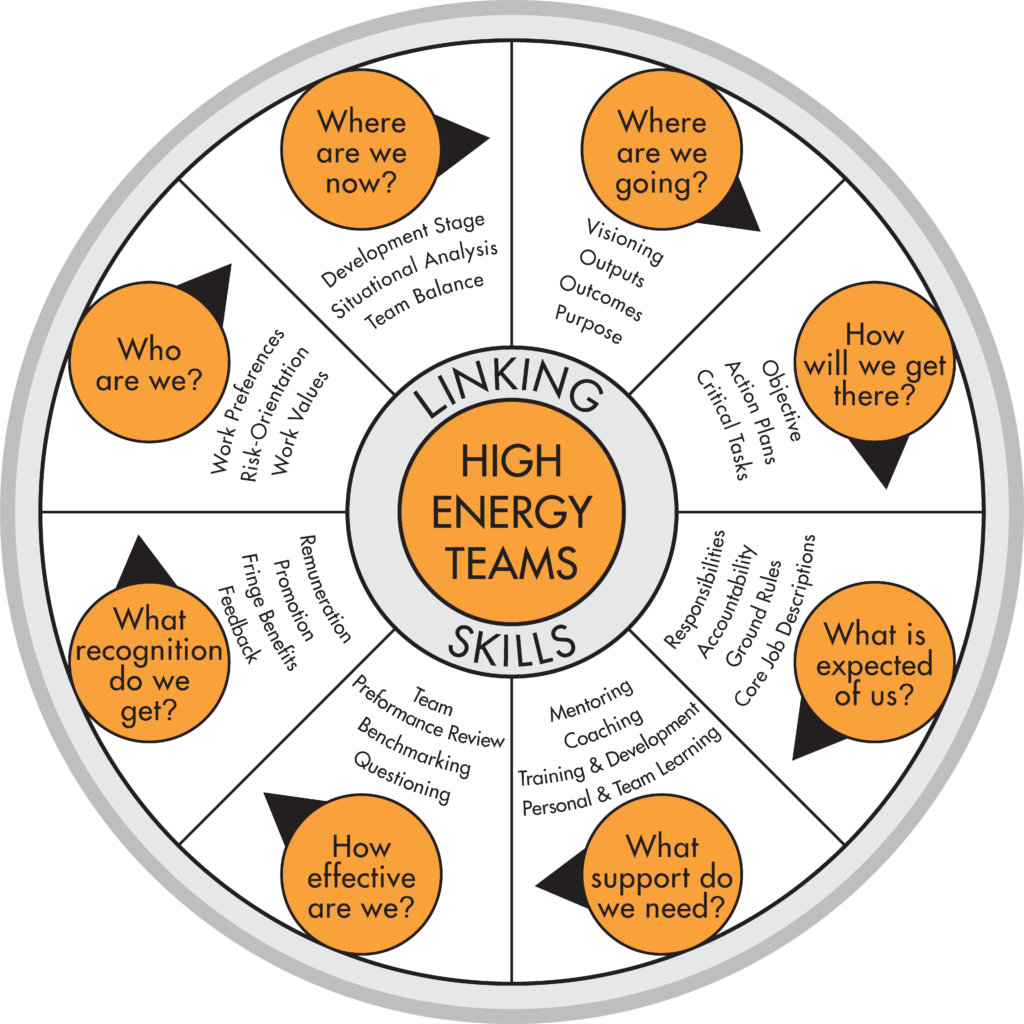
Through decades of research into high-performing teams, we’ve identified eight fundamental dimensions that predict team success. These aren’t abstract concepts — they’re measurable conditions that separate thriving teams from struggling ones:
- Team Identity: Does the team have a clear sense of who they are and what they stand for?
- Current State: Can team members accurately assess where they are right now?
- Strategic Direction: Is there shared clarity on where the team is heading?
- Execution Approach: Does everyone understand how the team will achieve its goals?
- Role Clarity: Are expectations and responsibilities clearly defined?
- Support Systems: Does the team have the resources and development they need?
- Effectiveness Metrics: Are there meaningful ways to measure real impact?
- Recognition Patterns: Does the team feel valued in ways that sustain motivation?
What makes these dimensions powerful isn’t just their comprehensiveness — it’s their predictive nature. Teams strong in these areas consistently outperform those that aren’t, regardless of industry or context.
The Elements of Effective Team Measurement
Effective team measurement requires more than good intentions — it requires a systematic approach. Multiple perspectives matter: single-source feedback creates blind spots, and the most accurate picture emerges when you gather input from everyone who interacts with the team’s work. Consistency enables tracking — ad hoc check-ins provide snapshots, but sustainable improvement requires regular measurement that reveals trends over time. Early indicators beat lagging metrics: the best measurement systems identify potential problems before they impact deliverables.
Moving Beyond Gut Instinct
Most leaders rely on intuition to gauge team health. They notice energy levels in meetings, observe collaboration patterns, and sense when something feels off. This intuition is valuable — and insufficient. Human perception has limitations: we notice what confirms our existing beliefs, miss gradual changes that happen slowly, and often conflate activity with effectiveness.
The most effective leaders combine intuition with systematic measurement. They use data to validate hunches, discover blind spots, and track changes that happen too gradually to notice day-to-day. This isn’t about replacing human judgment with spreadsheets — it’s about giving judgment better information to work with. The teams that thrive tomorrow are the ones whose leaders measure what matters today.